Choose your image
Open a JPG, PNG or WebP from your device. Your file stays with you.
A square that suits your image. Crop the edges or keep everything with a clean padded background.
or browse your files to get started
JPG, PNG & WebP · Up to 25 MiB each
You can also paste an imageExact canvas. Keep the whole image with padding.
1 KB = 1,000 bytes · 1 MB = 1,000,000 bytes
Available for fit mode; exact crop/padding dimensions stay fixed.
Enlargement does not restore detail.
Processed locally. No uploads, no account.
50 files · 250 MiB total · 24 MP · 8192 px per side
Open a JPG, PNG or WebP from your device. Your file stays with you.
Set your dimensions, choose how to fit the image, and check the preview.
Process your image, review the actual size, and download the result.
A few other ways to get your images ready.
A practical field guide to image size, composition and file weight. Read from start to finish, or jump straight to the decision you need to make.
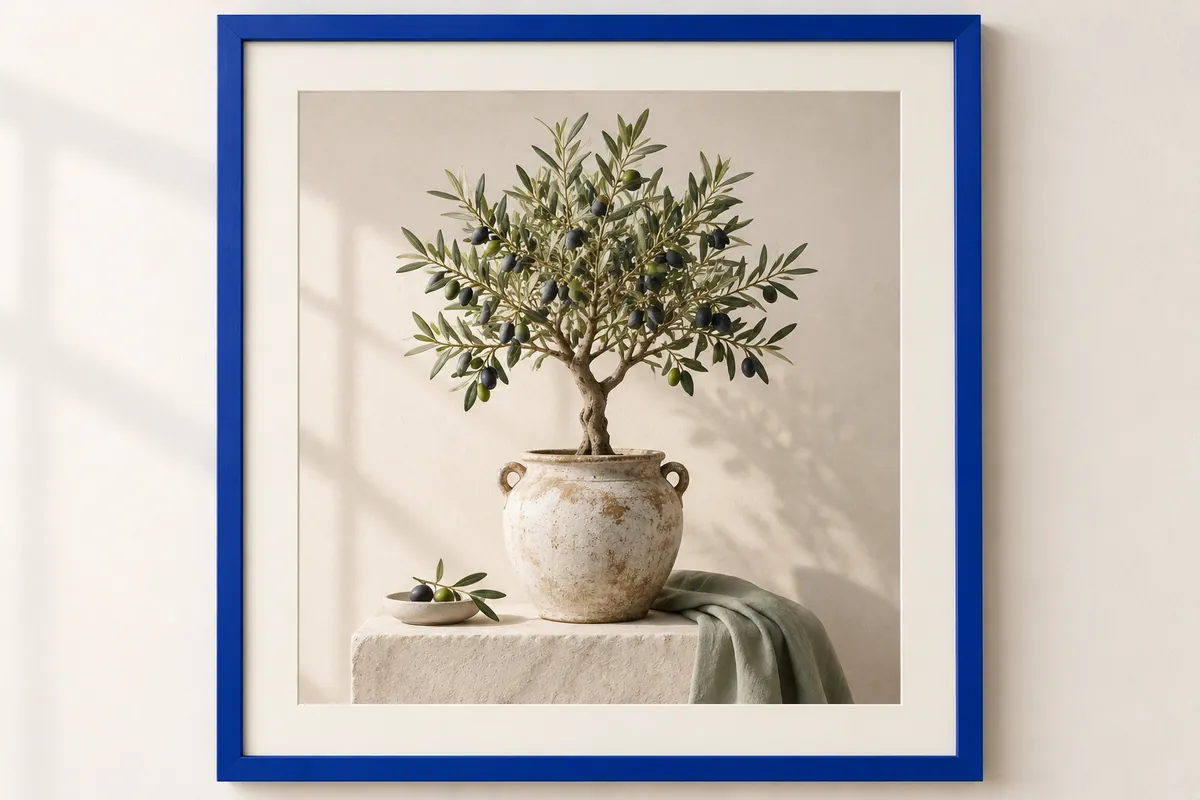
For a product catalog, the square may be a container that makes every tile consistent. For an avatar or tightly framed preview, the square may be the composition itself. Padding answers the first need by keeping the complete image visible. Cropping answers the second by selecting a square part of the source. Choose based on the subject, not merely on the target numbers.
Check the resulting subject scale with both a portrait and a landscape. An identical outer canvas can leave different amounts of padding. Transparent margins and white margins are not equivalent on a dark page. Keep PNG or WebP when you need alpha; choose a deliberate solid background when the destination requires an opaque image.
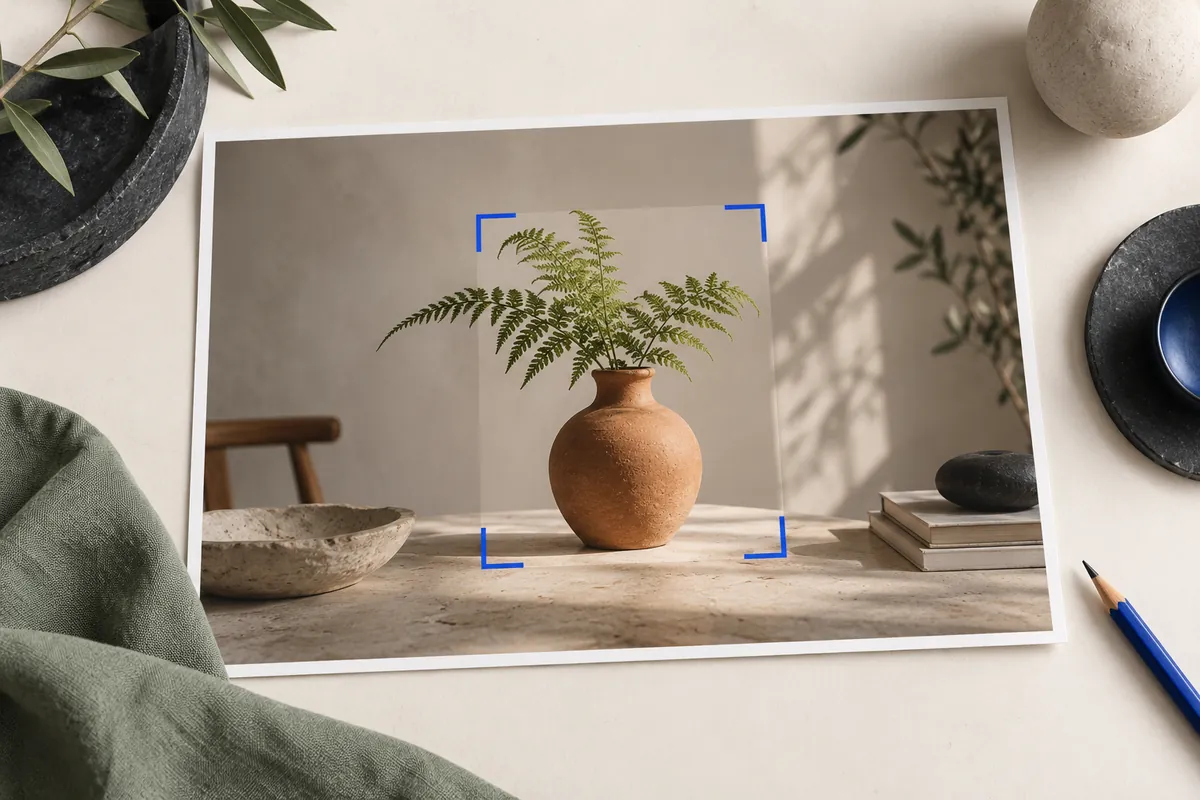
Aspect ratio is width divided by height. A 4000 × 3000 photograph has a 4:3 ratio; a 1200 × 800 photograph has a 3:2 ratio. Changing both sides by the same scale factor preserves this relationship. Changing them independently can stretch a face, widen a bottle or turn a circle into an oval. This editor uses proportional fitting, cropping or padding instead of treating distortion as an acceptable resize.
When you only know the desired width, leave the other side automatic. For a 4000 × 3000 source, width 1600 gives height 1200. If the destination instead needs 1600 × 900, you are also asking for a new ratio. Decide whether the missing space should come from cropping the image or adding space around it. A ratio decision is a composition decision, not just a multiplication.
Padding changes the canvas while leaving the whole photograph visible. It is useful for catalog tiles, artwork previews and layouts where every file needs the same outer shape. Cover changes the composition to fill that shape. Both can make a 1080 × 1080 file, but only padding keeps all the original edges. Think about whether empty space or missing content is the more acceptable tradeoff.
A 1200 × 1800 portrait fitted into 1080 × 1080 becomes 720 × 1080, leaving 180 px on each side. A small 600 × 400 source stays at that size when enlargement is disabled; on a 1080 square it leaves 240 px horizontally and 340 px vertically. This can be the correct outcome. A larger canvas is not permission to invent missing source detail.
Transparent space is not white space. An alpha channel records how opaque each pixel is, including soft edges around a logo or illustration. PNG and static WebP outputs can retain this channel. JPEG cannot: the image must be composited onto a background. Choose that background deliberately, especially when the final page is dark or the artwork has pale lettering.
Inspect edges against both light and dark surfaces. A logo that looks correct on white can reveal a halo on navy. Padding has the same choice: keep its empty space transparent, or fill it with a chosen color. Once alpha has been flattened into an opaque file, switching the extension back to PNG cannot reconstruct the missing transparency. Return to the transparent original instead.
A consistent catalog begins with a consistent canvas and a deliberate subject scale. Stretching each photograph to the same width and height makes bottles, shoes and boxes look different from their real proportions. Padding is a safer starting point when the complete item matters. A fixed canvas makes files match; it does not automatically make every photographed object occupy the same percentage of that canvas.
Compare an object that nearly touches the source edges with one photographed from farther away. Both may need separate framing before the shared export. Keep shadows and labels that help a shopper understand the item. Test the background color with the actual storefront. This editor prepares the image rectangle; it does not remove backgrounds, retouch defects or certify marketplace acceptance.
A preview is helpful, but the saved output is what the receiving app will use. Check its actual dimensions, MIME type and exact bytes. Open the file in an image viewer, inspect the important details at a sensible scale, and confirm that transparency or the chosen background behaves as expected. If you created a ZIP, open it and compare its successful entries with the expected count.
When a result fails, change the constraint that is actually responsible. Wrong shape calls for a geometry decision; unreadable text calls for more detail or less aggressive encoding; excessive bytes call for a permitted compression or dimension change. Keep each candidate separate until you choose the final one. The original remains your reliable starting point for every new export.
These relationships explain why changing one setting can affect another. Use them to identify which constraint matters most for your image.
Fit treats both dimensions as maximum bounds and preserves the original ratio. It can therefore produce a smaller rectangle. Use padding for an exact canvas with the complete image, or cover when you accept removing edges.
No. JPEG quality 100 is still an encoding setting, not a promise of identical source pixels. Resizing itself also changes the grid. Preserve the original when you need an unchanged archive.
No. Enlargement estimates new pixels and cannot reliably reconstruct details absent from the source. Find a higher-resolution original when those details are important.
The numerical examples on this page come from explicit geometry calculations and the project’s synthetic files. Hypothetical byte counts illustrate acceptance rules; downloadable sample counts describe those specific files. The references below explain the underlying formats and browser export API, not a guaranteed saving or acceptance by another service.
Keep the original, choose one clear requirement, and inspect the exported file. A useful result meets its destination’s rules and keeps the details that matter.
Back to the image tools